
2005 - "Academy Year Two"
2005
January 7, 2005
“The Last Unicorn”
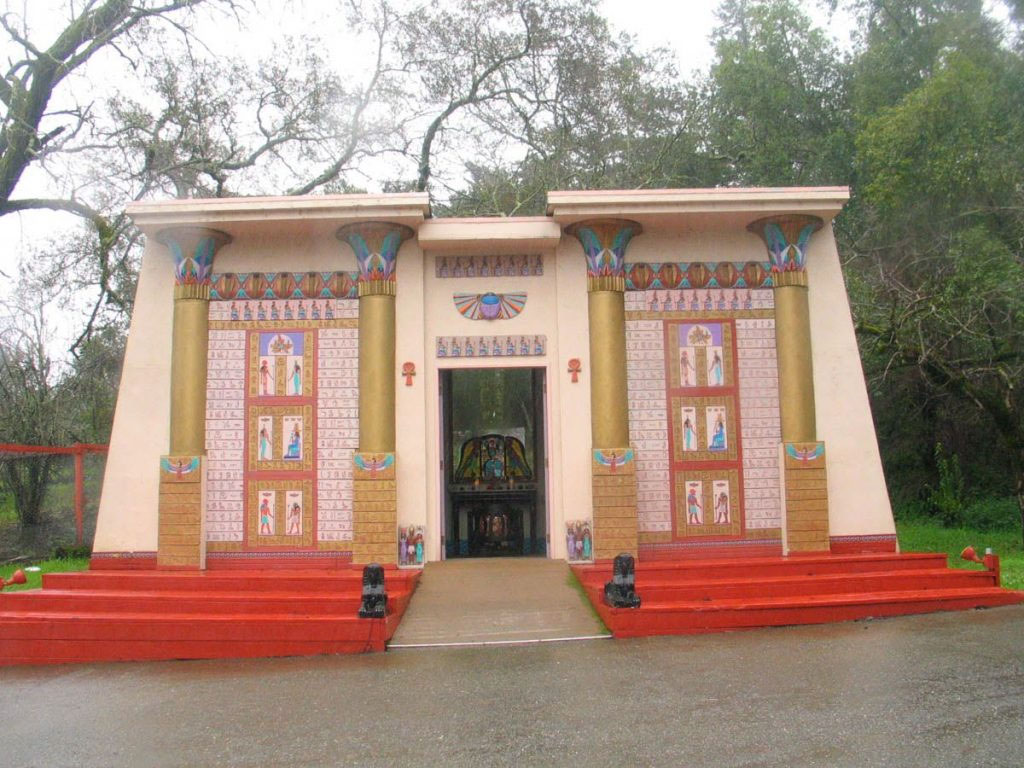
- Peter travels to the Isis Oasis based on information from Oberon Zell and expects to see a real unicorn there.
- He describes the site as a temple-like environment with a wisdom tree, exotic animals, and a strong mythic atmosphere.
- Oberon tells him stories about Lancelot and off-grid life, adding lineage context to the visit.
- Peter sees the unicorn in its stall but cannot photograph it due to angle and other animals, though he emphasizes feeling its presence strongly.
- He concludes that the unicorn’s reality matters more than documentation, treating it as confirmation that myths have literal counterparts.
- The chapter keeps Oberon’s mentorship thread active and ties animal encounter to Peter’s “the world is more magical than it seems” premise.
Read More
January 26, 2005
“The Frost Labyrinth”
- As part of Academy training, Peter undertakes an intensive physical practice: shoveling snow to build a large labyrinth on a mountain.
- He describes the work bringing up buried rage, grief, and exhaustion, as if digging through frozen emotions with each shovel.
- He depicts the process as long and difficult, with fear that it will never end, but continues anyway.
- He expresses gratitude for LeFaye’s mentorship and emotional holding while he moves through these states.
- He describes night work in moonlight and later daylight relief as the labyrinth’s paths finally take shape and results become visible.
- The chapter closes with a sense of tired thankfulness and partial emotional thawing after sustained effort.
Read More
February 16, 2005
“The Divine Cruelty”
- Peter wrestles with the question of whether the universe is benevolent, expressing anger at suffering and what he perceives as divine cruelty.
- He asks how a loving God could allow horrors and frames the world as an imprisonment shaped by the age (Kali Yuga).
- He resolves to build something that could help or protect people from manipulation and suffering, treating his project as a form of service.
- He acknowledges that later experiences (including a future episode with Joshua) will soften or complicate this stance, but at this time the rage is dominant.
- He connects his outrage to his own instability: shifting sense of self, memory loss, and fleeting access to “lightning” clarity amid darkness.
- He hints that this theology struggle is entangled with personal trauma and family imprinting, not just abstract metaphysics.
Read More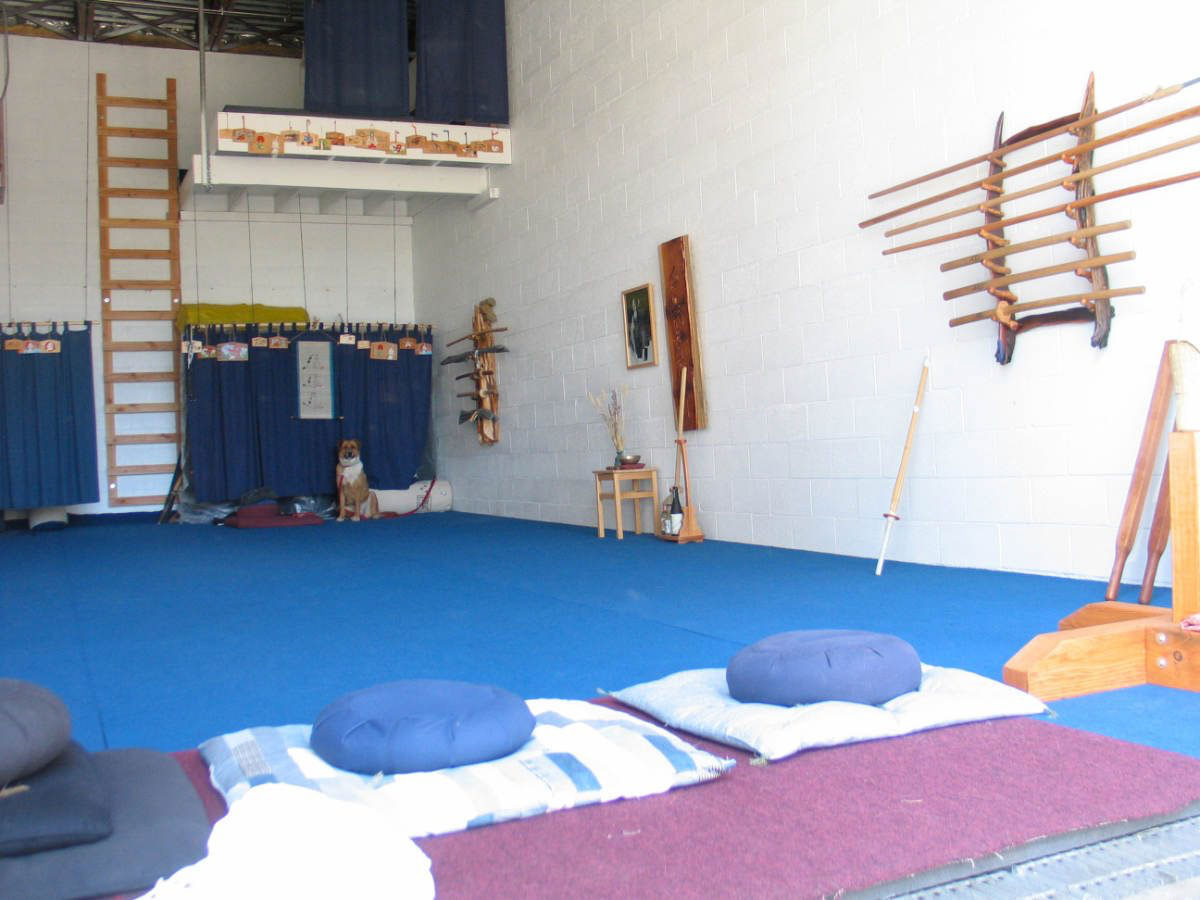
March 1, 2005
“Matsubadojo”
- Peter begins studying aikido in Kings Beach as a counterbalance to the Academy’s receptive/divinatory practices and to reconnect with disciplined movement.
- He frames aikido as a way to face intensity without the intention to harm, responding to his history of rage and feeling attacked by others’ energy.
- He introduces Sensei Jason House and describes sensing a refined, lifetime-honed “warrior” quality in him beyond surface skill.
- Peter reflects on martial geometry (circles vs triangles) as symbolic of different ways of moving through conflict and life.
- He describes misogi meditation practices and a simple ritual environment (shrine/kami) alongside friends who help with practical tasks like shoveling snow.
- The chapter positions movement practice as a means of integrating the Divine Masculine: strength, confrontation, and restraint.
Read More
March 17, 2005
“Elements of Magic”
- Peter watches Avatar: The Last Airbender and uses it as a teaching mirror for his ongoing elemental worldview.
- He asserts that everything in life is made of the same elements, and that “mundane” activities are still expressions of elemental magic.
- He links elemental identity to divination systems, noting astrology as one way he interprets personal elemental makeup (e.g., air/libra).
- He describes deepening into tarot practice at the Academy and starting to see archetypal “types” in the cards as real people/circumstances in life.
- He frames the key insight as perceptual: magic is present everywhere, but people do not enter it at depth.
- The chapter functions as a conceptual clarification rather than a narrative event sequence.
Read More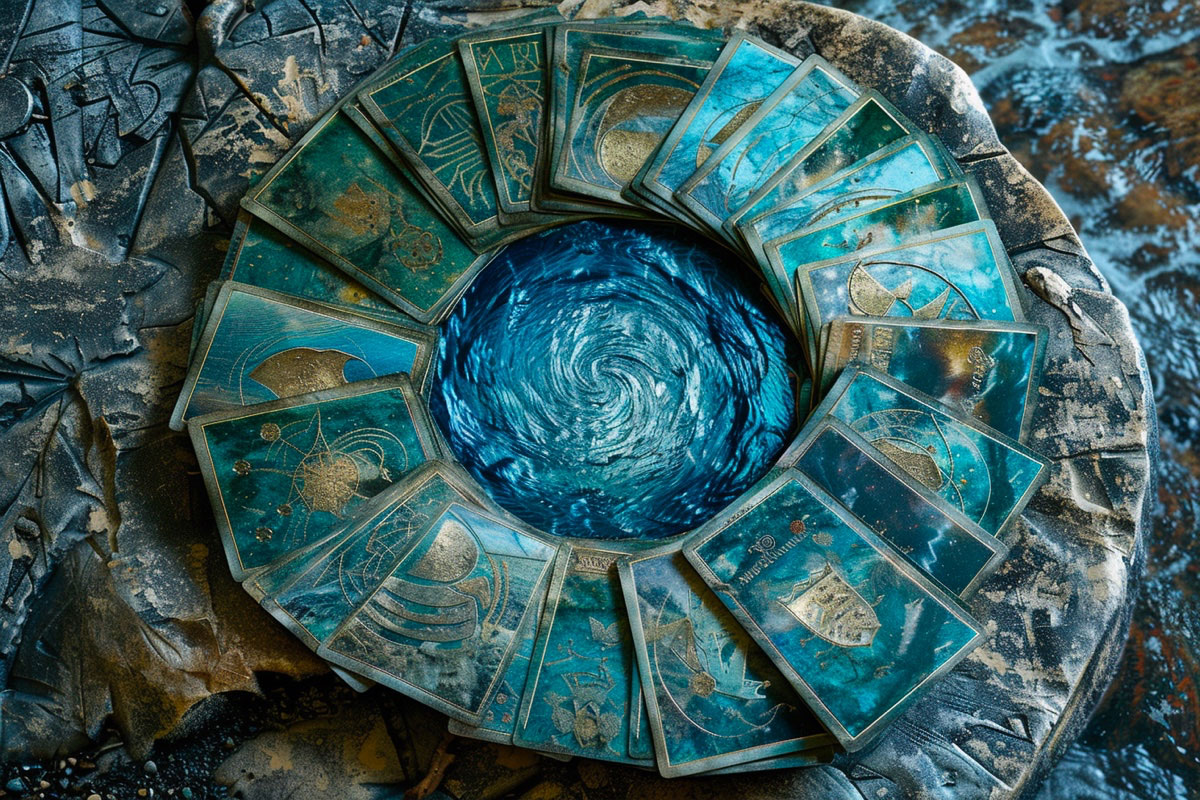
May 4, 2005
“Arts of Magic”
- Peter describes advancing in divination training from playing cards to the Rider-Waite tarot and learning LeFaye’s method of using three decks together.
- He notes the typical deck combination (tarot + animal oracle + faerie healing deck) and describes regular study meetings with Cassandra and Lady Ash.
- He spends extensive additional time with LeFaye beyond formal sessions, discussing magic and running through the forest with her wolfhounds.
- He describes building personal study materials (a “journal of magic”) and developing his own symbolic language around the teachings.
- He portrays the woods and land behind the Academy as an active teacher, with rock-hopping play and improvisational “training ground” games.
- The chapter includes a “struggling with the earth plane” thread: practical difficulties and overwhelm continue alongside mystical progress.
Read More
June 10, 2005
“Song of the Land”
- Peter resumes a perfect-pitch ear training course in an effort to understand music as a language rather than an overwhelming sensory flood.
- While listening, he describes experiencing Tahoe/the land as communicating through vibration, as if the lake’s voice is present in sound and rhythm.
- He reflects on music culture (including jam-band “good family” ethos) and distinguishes his personal tastes from his respect for the communal tone.
- He experiences a vision-like synthesis where the land appears to be “singing” in colored vibration, tying perception of place to musical structure.
- He connects music to story structure, describing timeline as beat/chorus and life as organized vibration.
- He ends by returning to his ongoing difficulty with repetition and instability: insights come, but his ability to hold them flickers.
Read More
August 20, 2005
“Dancing with the Deva”
- Peter describes one of his core joys at the Academy: running in the woods with the wolfhounds Mesoon and Tonkay.
- He explains a game they call “the Puppy Run,” where the terrain becomes an interactive training space for earth-connection and attention.
- He recounts leaping from rock to rock and imagining hazards (ground as lava) as a way of playfully engaging the land’s intelligence.
- He frames the experience as shamanic, saying the land/deva transmit increasing “difficulty” and lessons through the environment.
- He notes finding remnants near old trails (metal, rusted objects) that evoke prior travelers and layered history in the landscape.
- The chapter centers on embodied dialogue with place rather than interpersonal drama or plot events.
Read More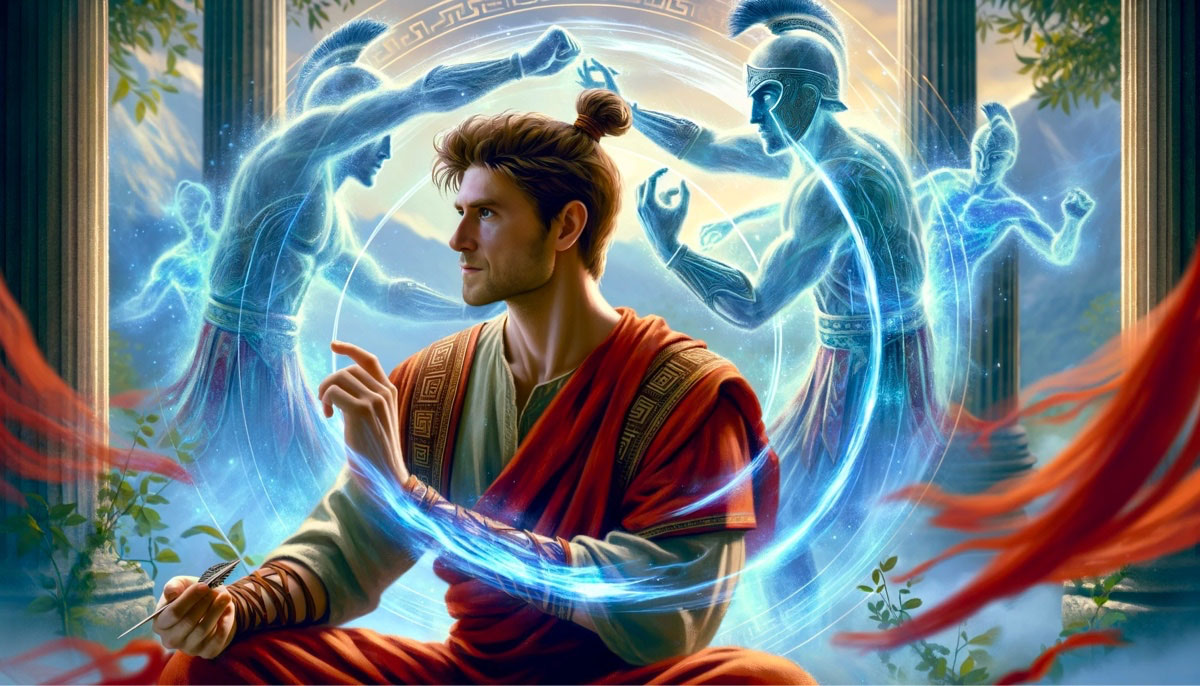
September 10, 2005
“Standing Ground”
- Peter describes being challenged by someone he brought into the Academy, which triggers fear about safety and old territory-defense instincts.
- He feels a visceral threat response and becomes preoccupied with the idea that he may need lethal force to establish boundaries.
- He responds by training more intensely and explicitly sets an intention to physically destroy the challenger, treating it as life-or-death.
- He notes that in his internal reality at the time, “civilization” and legal frameworks do not register; the conflict reads as primal survival.
- During preparation he experiences a wide vision of lifetimes of conflict flipping between dominance and defeat, revealing futility and repetition.
- The chapter ends with a partial shift: recognizing the cycle and longing to be free of it, even while still in the grip of aggression.
Read More
September 30, 2005
“Mirrormask”
- The page contains only a title/date and a single image, with no narrative description or context.
- No details are provided about what happens, who is present, or what is discussed in relation to "Mirrormask."
- As written, it functions as an image-based placeholder entry.
Read More
November 14, 2005
“The Prophecy”
- Peter meets a Vedic astrologer in the mountains of “Tahingaard” and receives a chart reading.
- The astrologer tells Peter he has “no karma,” something the astrologer has never seen before.
- When Peter asks what the purpose is without karma, the astrologer says Peter is here “to teach the siddhi.”
- Peter experiences a vivid inner vision of a blank, humanoid “tabula rasa” body parallel to their own.
- The episode shifts into Peter trying to explain how having no karmic imprint changes basic human understanding (needs, aging, authority, compassion, spiritual “process”).
- The chapter ends by framing this as difficult-to-communicate architecture that shapes Peter’s distance from ordinary assumptions.
Read More
November 23, 2005
“The Life Equation”
- Peter describes continuing Academy studies and visiting “Story temples” that look like comic book stores.
- While reading Grant Morrison’s Seven Soldiers, Peter has a revelation about a “Fifth Wall” beyond the fourth-wall concept.
- Peter experiences the character Zatanna as reaching out, which Peter interprets as a goddess or archetype of magic asking for help.
- Peter frames the interaction as author/reader power over a fictional realm, feeling Zatanna “feel” Peter in return.
- Peter performs a focused act of intention/participation (sharing energy, speaking “magic words”) as a kind of cross-realm collaboration.
- The episode ends with Peter naming the core question driving this phase: whether free will is real, and resolving to seek and share a “Life Equation” and build a “Motherbox”-like tool for navigation and transformation.
Read More