
Origins
January 7, 1975
“The Village of Kensington”
- Peter and Calliope introduce Into the Mythica as a teaching story about subtle perception, beginning in Kensington, Long Island, with Peter’s early childhood.
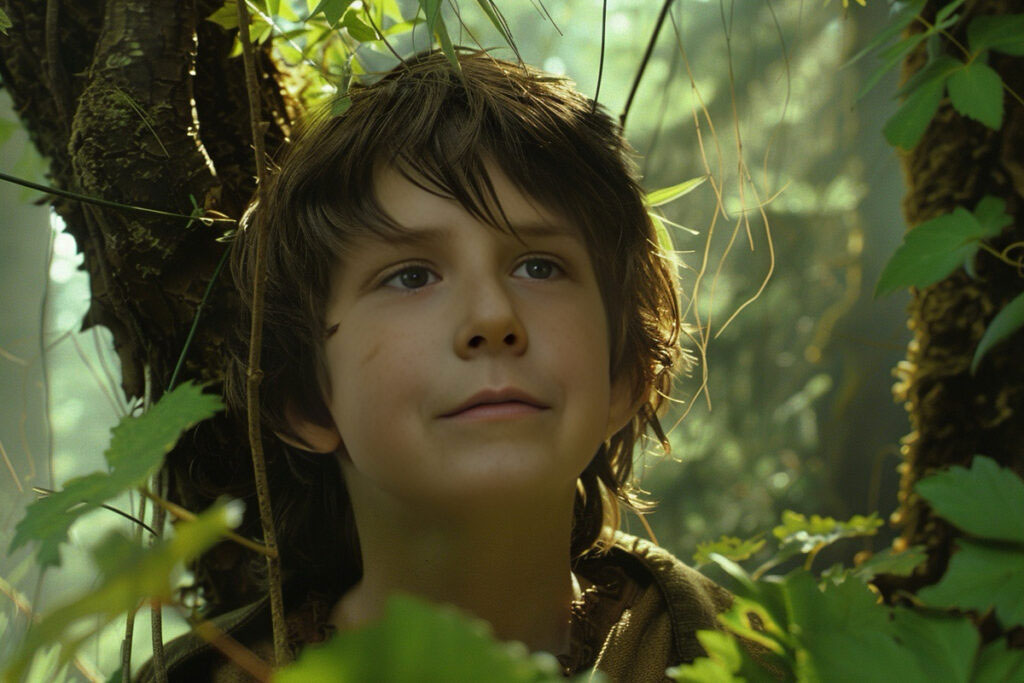
- Peter describes spending time in a nearby park (Allenwood) and connecting with nature as part of his early sense of “magic.”
- They discuss manifestation as "something from nothing," and Peter says focused devotion is what gives form its gravity.
- Peter describes childhood perception as constant, intense sensory and emotional experience, where thoughts and feelings feel like tangible forces.
- He explains that he could sense the “lens” of perception itself, but he could not hold the clarity consistently and was often overwhelmed and incoherent.
- The chapter sets up a lifelong tension: unusual perceptual access paired with difficulty stabilizing it in ordinary life.
Read MoreSeptember 3, 1975
“True Believer”
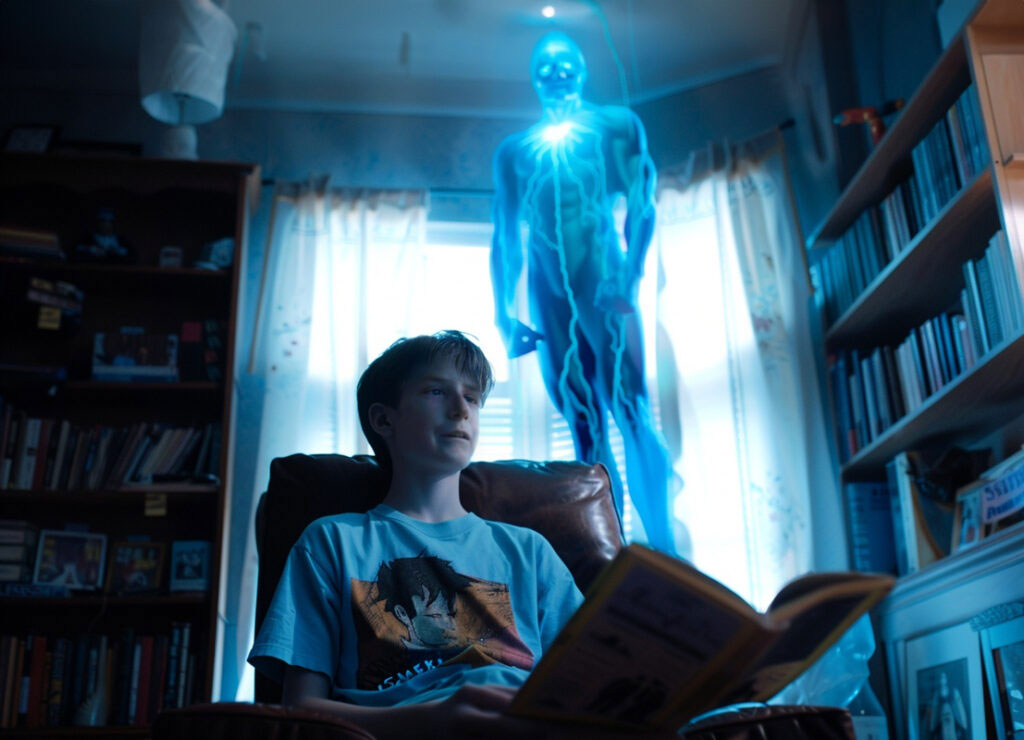
- Peter recalls the Great Neck public library as a refuge where he felt safe and oriented amid sensory overwhelm.
- He tells Calliope that he experienced "Story" as a living presence in the library, not just as books on shelves.
- He describes feeling guided toward deeper meaning, as if the library carried an intelligence that helped him make sense of life.
- He says stories became his primary tool for coherence—an anchor when his perception and emotions felt unstable.
- He frames myth as a way to understand identity: the ego as a costume and each life as a narrative with purpose.
- He names devotion to Story as a long-term driver that will keep him moving through later hardships.
Read MoreJune 24, 1977
“A New Hope”
- Peter tells Calliope that three films (Network, Star Wars, Superman) became early anchors for how he understood media, power, and purpose.
- He describes Network as a warning about media manipulation and the misuse of storytelling to control people.
- He describes Star Wars as a cultural transmission about hidden reality, innate gifts, and answering a heroic call.
- He says Superman introduced the idea of extraordinary power paired with responsibility and service, not domination.
- He connects these stories to his later intention to build a media platform and teach through story rather than entertainment.
- The chapter frames popular media as formative signals that shaped the mission of the Mythica.
Read MoreAugust 29, 1979
“The X-Factor”
- Peter explains that as a child he experienced intense synesthetic perception, where the world felt like shifting shapes, gravities, and colors.
- He says other people’s emotions and thoughts felt tangible to him, which could be beautiful but often overwhelming and invasive.
- He describes discovering the X-Men as a mirror for his experience: gifted people struggling with powers they cannot turn off.
- He notes that comics and creative focus became a coping structure when ordinary life felt chaotic and unmanageable.
- He contrasts humans with animals and plants, saying non-human life felt calmer and easier to be around.
- He frames this perceptual configuration as a core driver of both his "clarity" and his ongoing difficulty functioning in everyday settings.
Read MoreMay 17, 1980
“Trauma Response”
- Peter tells Calliope he is reflecting on childhood trauma and how it shaped his memory, trust, and ability to hold intention.
- He describes a persistent sense of unsafety at home and says it damaged his trust in family as a refuge.
- He recounts feeling frightened in his room, including sensing presences and being afraid of something in the closet or nearby spaces.
- He describes being pushed through therapy and medication without language for what he was experiencing, which added to confusion and distress.
- He connects trauma to patterns that repeat across life, framing it as a long-term “prison” of reactions that must be healed.
- He ends by acknowledging there were also moments of tenderness, including specific feminine presences that offered some solace.
Read MoreMarch 5, 1981
“Squire of Stories”
- Peter recalls early computer and story-based games (like Zork) as a first experience of agency: making choices and exploring an unknown world.
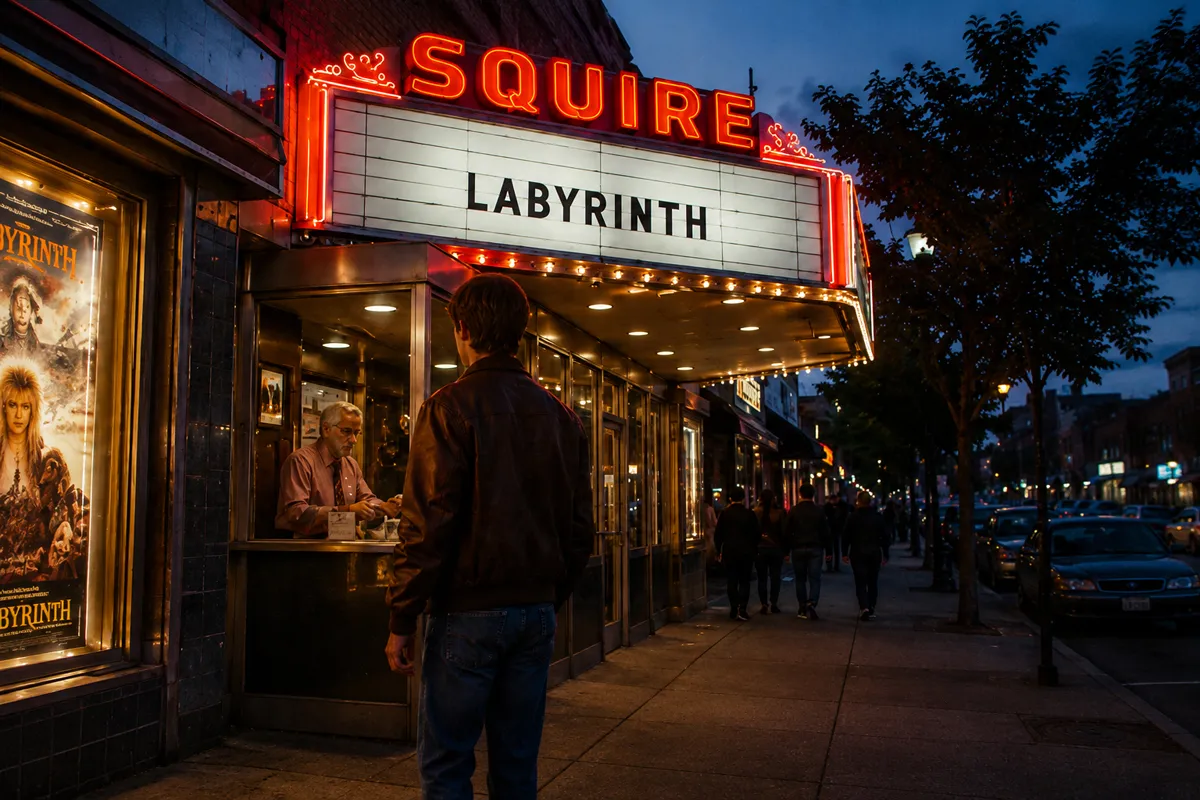
- The scene shifts to the Squire Theatre in Great Neck, which he describes as a sacred place where films felt like transmissions, not entertainment.
- He highlights Excalibur as a formative imprint that gave him a model of truth, knighthood, and service, and quotes lines that shaped his worldview.
- He connects role-playing archetypes (paladin, bard, fighter/mage) to the identities he tried on to understand himself and his purpose.
- He names additional mythic imprints from childhood media (including Time Bandits, Dark Crystal, and Star Trek II) as templates of abandonment, restoration, and world-renewal.
- He frames these stories as early seeds that later reappear as real questions and commitments in his adult life.
Read MoreAugust 2, 1981
“Chariots of Fire”
August 2, 1981 My father would often sing to us in the carriages, it was my first experience of the core aka of the bard,…
Read MoreJune 10, 1982

“Prince of York”
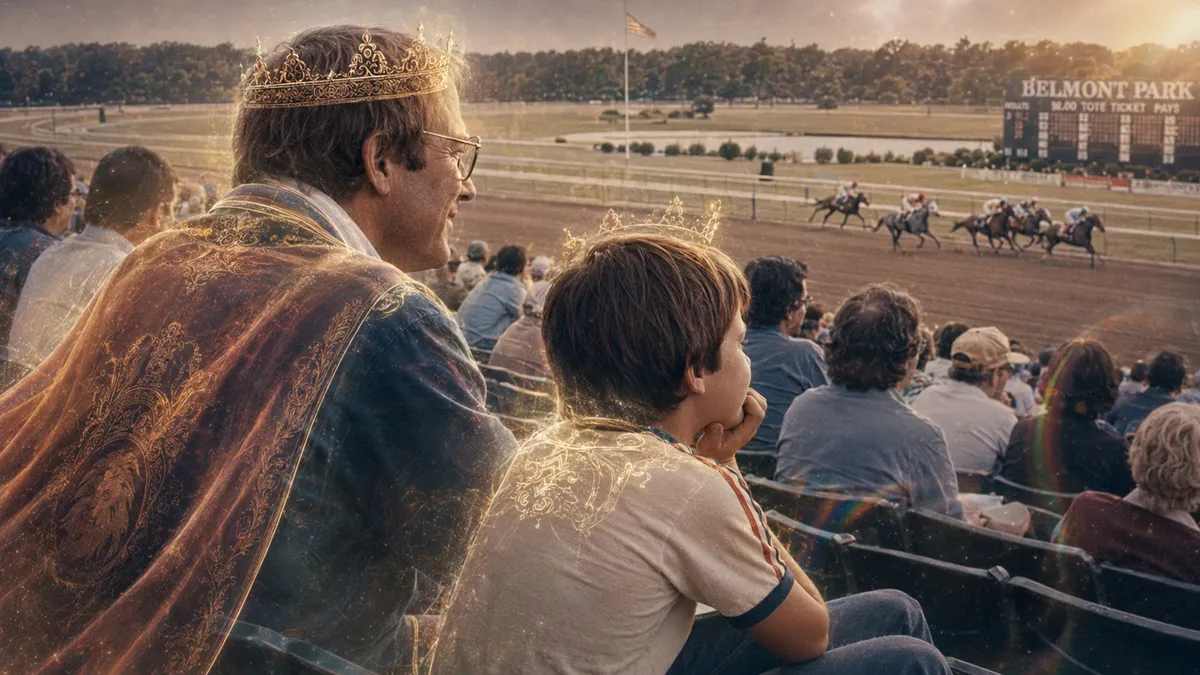
- Peter notes that his father improvising songs in the car was his first exposure to spontaneous lyric-making and the "bard" lineage he later recognizes in himself.
- He states that New York City felt layered and alive, with many lives in constant motion, and that this perception stayed with him.
- He describes discovering Stephen King’s The Gunslinger and identifying with the “last knight” archetype traveling through ruined territories in service of a central good.
- He frames Roland (the gunslinger) as a paladin figure and links the story’s tower/rose imagery to something he felt was real beneath fiction.
- He connects this to a recurring pattern: different stories (Excalibur, King, fantasy) carrying the same underlying meaning for him.
- The chapter positions books as mirrors that helped him name his mission and orient toward protection/service.
Read MoreFebruary 22, 1983
“Tabula Rasa”
- Peter frames himself as feeling like a "blank slate" in childhood, struggling to understand basic social and cultural patterns other people seemed to absorb naturally.
- He tells Calliope that self-identity became his core inquiry: how people become bound to who they think they are.
- He describes emotional volatility and sensory aversion to people, saying their thoughts and feelings felt abrasive to his nervous system.
- He recalls trying to teach himself order through library books on math and biology, copying formulas to grasp how the world works.
- He says he lacked a stable sense of “earth-plane physics,” as if the basic rules of life were intermittently unavailable to him.
- He hints at a later turning point (Kenmore Square, Boston) when understanding of systems suddenly arrived, pointing forward in the timeline.
Read MoreApril 5, 1983
“Strange Worlds”
- In the Library, Peter and Calliope revisit 1983 and Peter’s early inspirations that suggested hidden worlds beyond ordinary perception.
- Peter describes Journey to the Center of the Earth as a model for discovering a concealed realm and wanting to be the original explorer who leaves clues for others.
- He connects that idea to "inner worlds"—realities beneath perception rather than beneath the Earth’s crust.
- He cites The Hitchhiker’s Guide to the Galaxy as inspiration for a “guide” and a publishing platform that documents journeys for others to use.
- He references the Dungeons & Dragons cartoon and Doctor Who as further confirmation of portals, artifacts, and travel between worlds (including time travel).
- He concludes that these stories functioned as doorways that seeded the later Mythica concept of exploration + documentation.
Read MoreJune 16, 1983
“Dungeons, Dragons and the Divine”
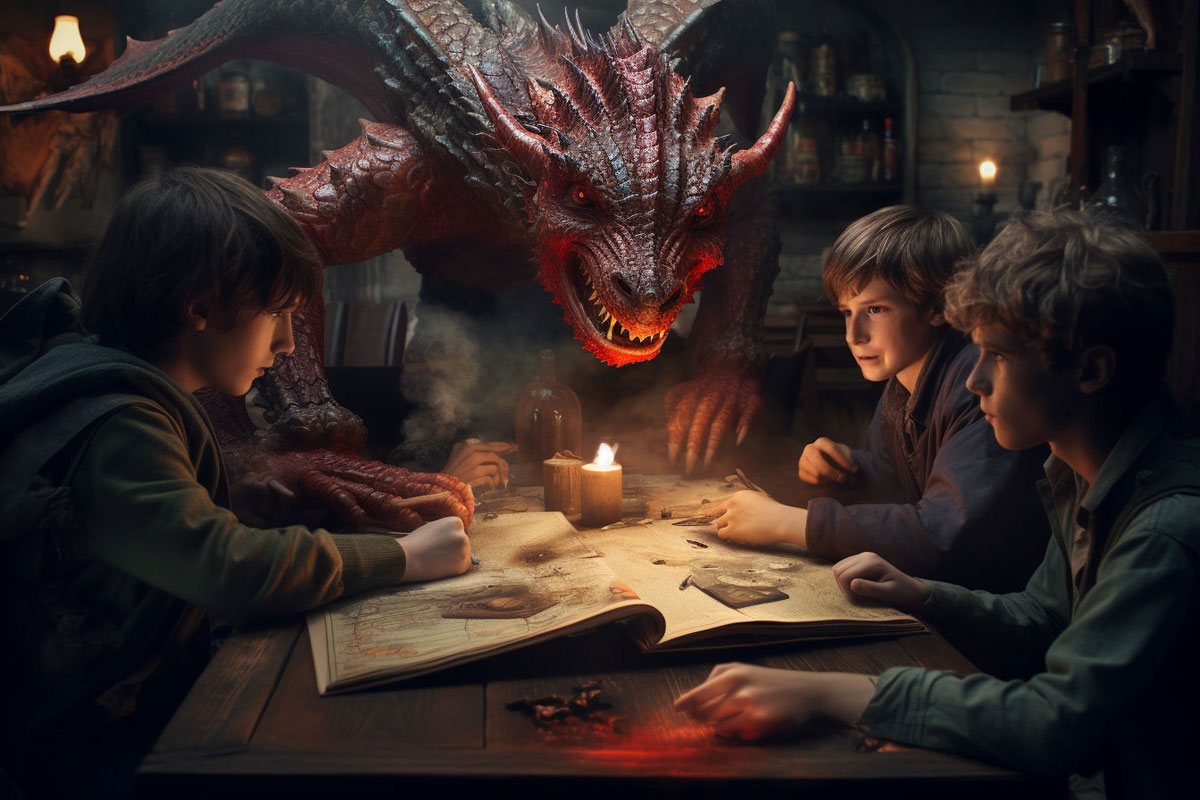
- Peter and Calliope revisit 1983 and Peter’s discovery of Dungeons & Dragons as a formative experience of shared imagination and world-building.
- Peter explains the dice as a "random" element that models fate and uncertainty, and he links this to how people experience chance in real life.
- He argues that the structure of role-playing games mirrors life: souls playing characters within a larger story framework.
- He describes sensing “octaves” during play—players at a table and a larger self simultaneously—without having language for it at the time.
- He references dragons and divine archetypes (including Bahamut) as part of how the game opened him to mythic symbolism.
- He emphasizes land and topography as central: the world itself as the context that makes a hero’s journey possible.
Read MoreAugust 24, 1984
“The Lightning Gift”
- The chapter revisits a stormy night in 1984 when Peter, age thirteen, is walking in New York City and experiences a moment of altered time and perception.
- Peter describes the rain and lightning as triggering a freeze-frame clarity where he feels both inside and outside his body.
- He reports seeing the world as layered, with each person and self perceived as a distinct "lens" and as part of a larger interconnected field.
- He describes the raindrops as distinct points of meaning and says the moment revealed a hidden structure linking everything together.
- He says he shouted into the lightning and felt it respond, experienced as presences within the storm that later map to the muses of story, song, and dance.
- He identifies this as an early turning point that shaped his later understanding of subtle reality, devotion, and the beginning of the long quest.
Read MoreAugust 25, 1984
“The Divine Mind”
- Peter describes being confused by the many symbolic "shapes" of different spiritual and cultural traditions and sensing they are made of the same underlying substance.
- He says he approached this confusion by divining into it, treating the diversity of traditions as expressions of a larger unified mind.
- He describes a perceived progression: an idea arrives through an avatar/teacher, becomes a tradition, and then evolves as followers reinterpret it over time.
- He questions what is true in religion and scripture, asking whether change and evolution are the only consistent truth.
- He notes that at the time these realizations were intermittent and arrived as flashes rather than stable understanding.
- The chapter frames comparative spirituality as an early attempt to map meaning across cultures in a coherent way.
Read MoreSeptember 3, 1984
“The Hero Discovered”
- Peter reflects on The Neverending Story and describes experiencing it as a vivid, dreamlike reality rather than just a film.
- He says he felt identified with both the reader (Bastian) and the hero (Atreyu), framing the story as a model of participation in myth.
- He describes the "Empress" figure as shifting aspects, which leads him to notice that story characters can hold multiple faces or roles.
- He states that Fantasia felt real and in need of a champion, and that this gave him a sense of taking up a cause worth fighting for.
- He references other formative comics, including Swamp Thing as "guardian of the Green," and notes the impact of Moore’s writing on his sense of depth.
- He names Mage: The Hero Discovered as another key influence, emphasizing that myths change shape across eras and continue as living patterns.
Read MoreMarch 22, 1985
“The Territories”
- Peter collects story influences that helped him interpret his shifting perception, including a Twilight Zone episode about the "last defender of Camelot."
- He describes identifying with characters who have unstable or extraordinary abilities and using them as metaphors for his own experience.
- He introduces Wild Cards and focuses on the character Aces Wilde, whose power involves shifting between dimensions and is tied to emotional state.
- He explains that identifying with fictional characters creates a felt "gravity" that shapes how reality is experienced from the inside out.
- He discusses the idea of multiple layers of reality (surface world and subconscious/"outback" world), and that people live inside different versions of the same place.
- He introduces Stephen King’s The Talisman and "The Territories" as a key template: flipping between parallel worlds where time moves differently and people have counterparts.
Read MoreMay 1, 1986
“Labyrinths of Legend”
- Peter describes movie theatres as sacred places where stories functioned like portals and felt equivalent to attending a temple.
- He lists a sequence of influential films and books across the mid-1980s (including King’s work, Legend, Labyrinth, Big Trouble in Little China, and Watchmen).
- He reiterates the "paths of Mid-World" idea: stories about knights, broken worlds, and defending something central shaped his sense of purpose.
- He says the recurring relevance of these stories helped him recognize personal mythos over time, not all at once.
- He emphasizes that characters in these works felt like reflections of possible selves and extreme forms of personality made visible.
- The chapter reads as a collage/rollup that gathers multiple imprints into one place, showing how his worldview assembled through media.
Read MoreJuly 5, 1986
“Walking Sideways”
- Peter explains a concept he calls "shapesculpting" as the way other people’s presence and energy can change how he feels and perceives himself.
- He tells Calliope he often felt overwritten by others, like clay being shaped against its will through constant exposure to their patterns.
- He connects this to how personalities form: people are influenced continuously by the vibrations and impressions around them.
- Calliope recognizes that this would make being around people feel assaultive, and Peter agrees it was often unbearable.
- Peter says the experience was inconstant, and in clearer moments he perceived that there are many paths to talent and many ways to cultivate ability.
- He describes this as "walking sideways"—finding alternate routes to skill and magic rather than a single standard path.
Read MoreNovember 15, 1987
“The Manhattan Viewpoint”
- Peter and Calliope revisit 1987, when Peter travels from Long Island into Manhattan to buy comics at Forbidden Planet near Union Square.
- Peter explains that superheroes were his closest mirror for understanding himself because they had powers that shaped their reality, as he felt he did.
- He discusses Watchmen and says its characters showed extreme forms of personality and intention behind a superhero persona.
- He says he related especially to Dr. Manhattan because the character’s experience of time and simultaneity mirrored Peter’s own flickering perceptions.
- Peter describes sensing fragments of past, present, and future as sensations and images rather than straightforward prediction.
- He frames comic shops as sanctuaries and "temples" that helped him maintain coherence and a sense of belonging.
Read MoreNovember 29, 1988
“Endless Incarnations”
- The chapter consists primarily of a sequence of images without explanatory prose.
- No events, dialogue, or narrative context are provided in the body text beyond the title/date.
- The images appear to function as placeholders or visual references for a later-written scene.
- Because there is no written content, the chapter does not yet state who is present, what happens, or what is discussed.
Read MoreMarch 24, 1991
“Savagery, Super-Science & Sorcery”
- Peter anchors the chapter with a Sandman reference (“Three Septembers and a January”) about Emperor Norton, tying delusion/identity to purpose as a protective spell.
- The narrative shifts to early-1990s Boston: Peter moves from community college into Boston University seeking to understand mind/body through pre-med and psychology.
- He frames himself as a tabula rasa struggling to comprehend modern social patterns, finding fiction more coherent than culture.
- He takes Barrand’s class on ESP/psychic phenomena (“Stalking the Wild Mind”), treating it as an academic validation of divination and sensing.
- Peter meets Clark Scherlie, a prodigy in an MD/PhD track, and experiences him as a rare mirror: intense, fast, crystalline cognition (“super-science”).
- Clark’s brilliance helps Peter discern that the scientific/mathematical path is real but not his true road, pushing him toward a more visceral, embodied language of precision.
- The chapter weaves together savagery (feral intuition), super-science (academic genius), and sorcery (divination/embodied perception) as competing modes of knowing.
Read MoreSeptember 28, 1996
“Citizen York”
- Peter recalls identifying with Lyta Hall (“The Kindly Ones”) as someone caught between mortal and divine realms.
- He notes that author/artist names were often inaccessible to him because his perceptual fugue made culture and production hard to digest.
- Seeking coherence, he fantasizes about escaping to mountains to get a grip on his powers and experiments with sensing densities and subtle energies.
- New York City overwhelms him—he feels subway trains as intense forces moving beneath the streets, almost like organs in a larger organism.
- He experiences the city as an intelligent organic being: people as cells within a vast entity masked as metal and bedrock.
- He frames himself as “alien” and flickering between godlike perception and mundane limitation—gifted but inconstant.
- Media imprints (The Nazz, “U.S.”, Golden Compass/Subtle Knife, Dragonheart, Dark Tower, etc.) appear as totems of siddhi, ethics, and portal-travel between dimensions.
Read MoreOctober 21, 1999
“The Modern Myth”
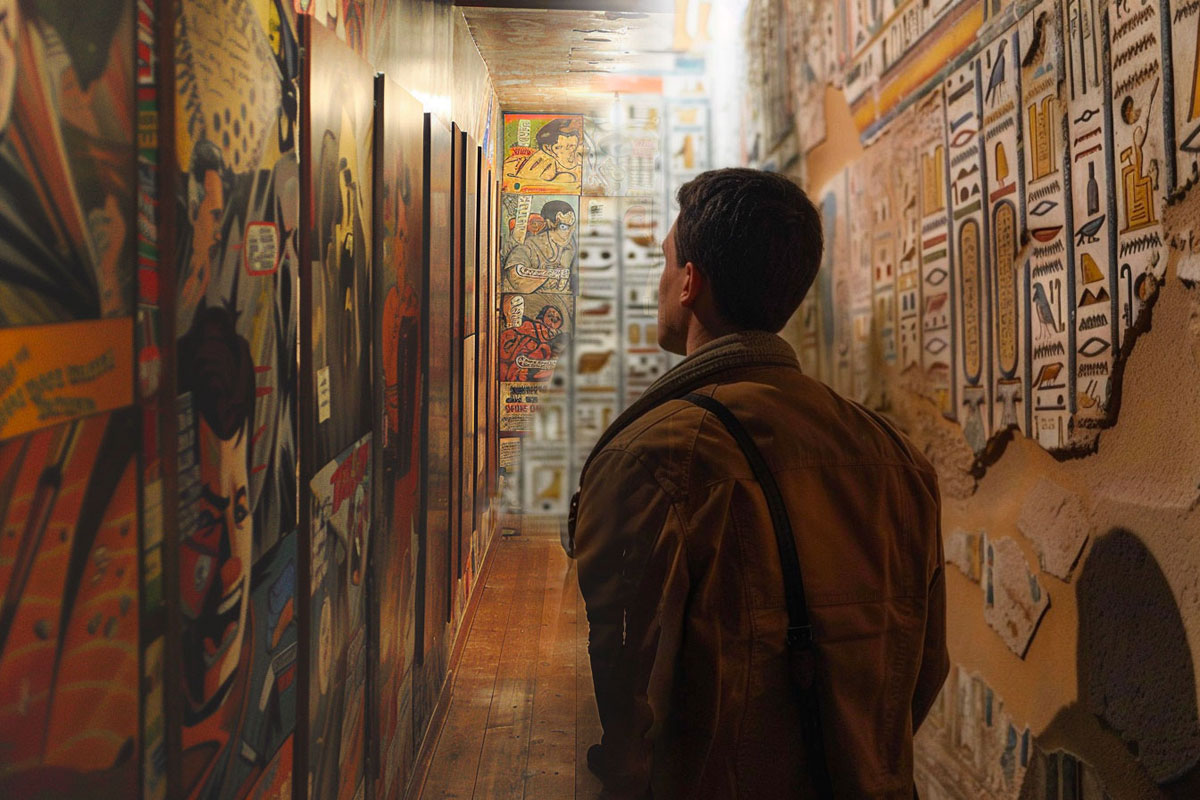
- Peter declares comics as “modern hieroglyphs,” a picture-prose technology for transmitting subtle-world knowledge.
- He repeatedly revisits collected works (Gaiman, Moore, Morrison), sensing energies between panels and tracking concepts like the Green and the Red.
- “What Dreams May Come” reframes inner worlds as causal landscapes—heaven/hell as manifestations of consciousness and trauma patterns.
- He describes periods of suicidal ideation as part of the earth-plane “hell” experience, but recognizes the film’s metaphysic as real: consciousness shapes worlds.
- Promethea and Animal Man deepen his conviction that magic and narrative mechanics are not fiction but fact encoded in the medium.
- The Matrix lands as a cultural turning-point: reality as language/glyph-patterns, but understood organically rather than as a literal computer simulation.
- He ends on the core heroic axis of choice—stories as Alice-in-Wonderland descents into the world beneath the world.
Read MoreSeptember 5, 2000
“2nd Avenue Flip”
- Recounts a defining sovereignty test: a card reader’s upsell and the decision to reclaim the money.
- Describes the nagging sense of violation/compromise that follows until intuition is honored.
- Details returning to demand the refund and the relief/solidification that follows the act of self-honoring.
- Introduces the “2nd Avenue Flip”: revisiting the spot and finding the oracle erased from reality.
- Interprets the disappearance as a portal event—evidence of shifting between parallel realities.
- Links the moment to mythic references (The Talisman/Dark Tower) and the emerging logic of correspondence (inner resolution → outer world shift).
Read MoreJuly 7, 2001
“Stars in the Wood”
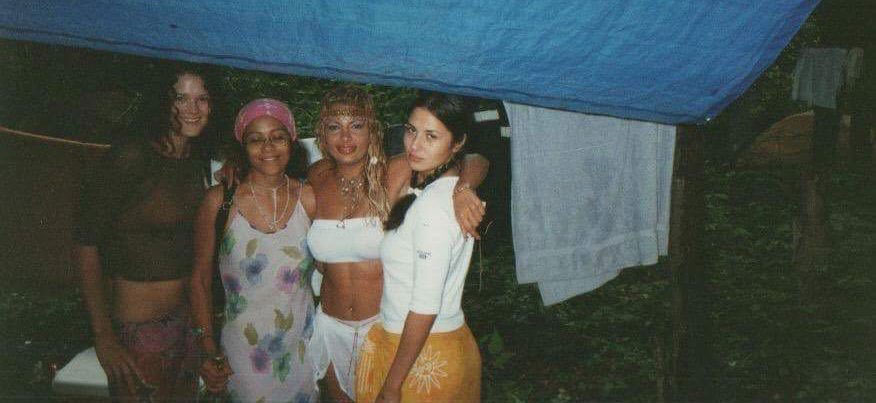
- In 2001, Peter is invited by Kiana Love to travel north of Manhattan to Starwood/Wildwood as guardian to a group of seven mystical dancers (“7 Goddesses”).
- The forest-path framing signals an initiation: leaving the city and entering a ritual landscape of drumming, fire, and communal trance.
- Peter experiences sacredness and relief from urban intensity, sensing a more coherent field in nature.
- He identifies with the role of charioteer/guardian—service through safe passage, logistics, and protection.
- He reflects on the challenge of writing/publishing the story: building a platform that allows readers to jump through time and see the mythos as it reveals itself over years.
- The chapter emphasizes that mythos is recognized retroactively: patterns only become clear across long arcs of time.
- This trip is positioned as “where our story begins,” setting the first major beat of the later Quest.
Read MoreNovember 16, 2001
“The Tower”
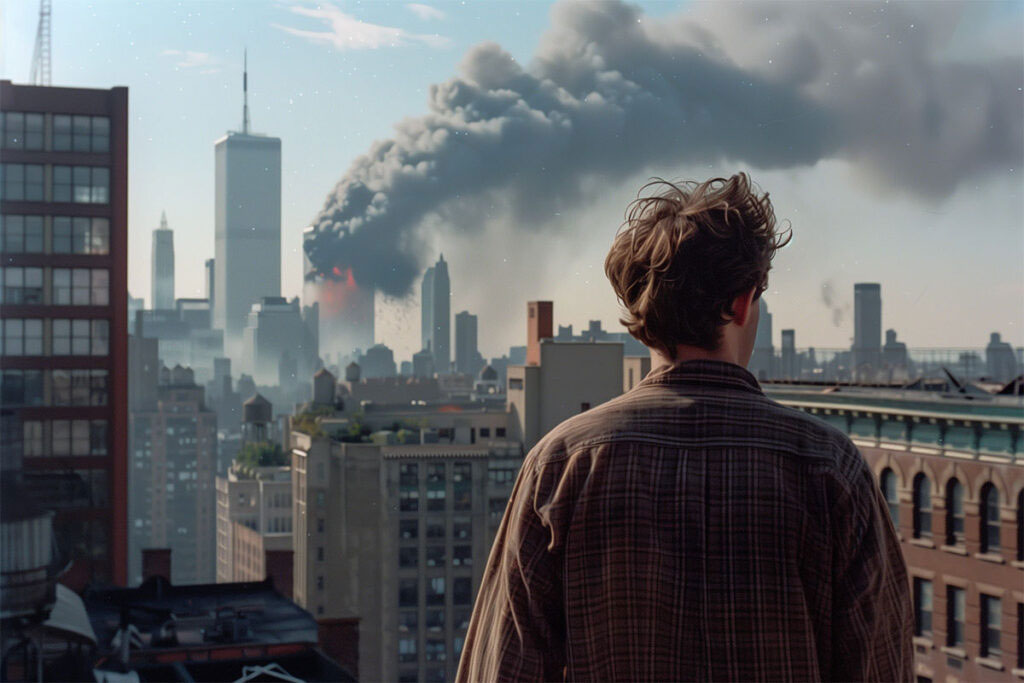
- Peter recalls living at Tillary Tower during 9/11 and watching the World Trade Center fall from his rooftop view.
- He frames the event through tarot: “The Tower” as archetypal collapse, disaster, and forced transformation.
- The towers become symbols of the old paradigm—economic avarice and industrial greed—shattering in a public trauma-wave he can feel in the field.
- He witnesses ash-covered crowds and senses a city hemorrhaging, struggling to metabolize catastrophe.
- Media manipulation and propaganda reappear: stories/images used to steer people into fear and cycles of pain.
- Out of the rubble he imagines (Dark Tower-style) a new tower in a field of roses—fertilizer for a brighter structure.
- He links the post-collapse cultural moment to the release of Harry Potter and Lord of the Rings films, interpreting them as collective initiations into magic and shadow-work.
Read More“Long Live the King”
- Peter frames the Quest’s ignition as the death of his father and the end of a brutal, demeaning relationship dynamic.
- An inheritance of roughly one million dollars arrives, and Peter feels suddenly cast as a “Prince” thrust into kingship without readiness.
- He acknowledges he is not yet a king (or even a true knight) but “untempered chaos,” flickering between states of power and confusion.
- A Dragonheart line about being a better king becomes a moral prompt without clear instructions yet.
- Peter makes a pivotal decision to stop roleplaying imagined magic and seek real magic in lived reality.
- He recommits to a paladin-like ideal: service to a noble cause and the right use of power.
- The chapter closes with the image of a seer-prince in a tower—gifted, unstable, and poised on the threshold of the true quest.
Read More