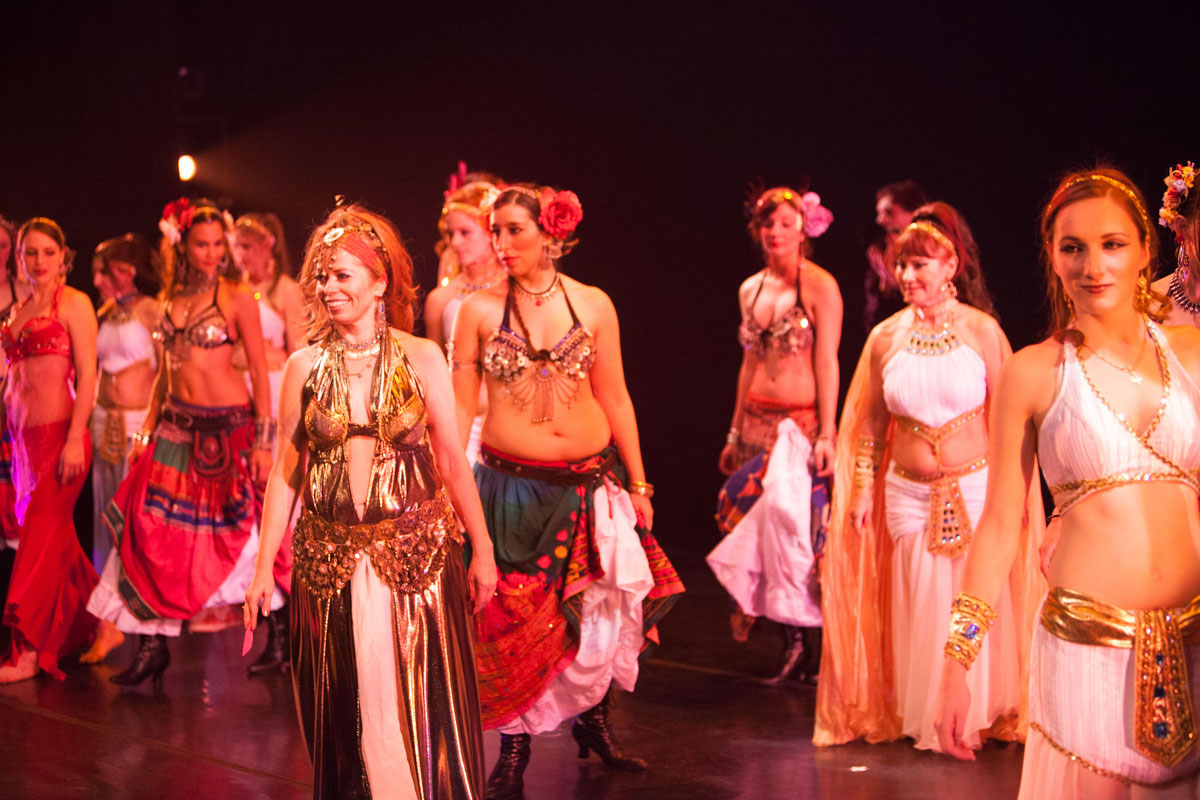
“Temple of Dance”
- Peter is led to a modern “temple of dance” event titled “Invading the Heart.”
- Peter describes seeking grounding and sacred presence throug…
Real-World IdentityAnasma Vuong-Rajau — performance arts dancer, choreographer, teacher, and singer. Half Tunisian, half Vietnamese, raised in Paris, France.Background & TrainingAfter completing an MA in Business Management, she left a marketing career at 23 to pursue dance full-time — a crossing threshold she later described as her "all time dream." She moved to New York City, where she trained and performed for five years with Bellyqueen and co-founded the NY Theatrical Bellydance Conference. Her movement vocabulary is deeply cross-trained: Bellydance, Hip Hop, Pantomime, Wushu, Salsa, Flamenco, Modern Jazz, Contemporary (Simonson technique), African dance, Gymnastics, Acting, and Yoga. She also became a state-recognized Contemporary Dance teacher in France, deepening her study of anatomy, pedagogy, and dance history. Her extensive Yoga Teacher training added interiority, breath-work, and alignment to her embodied practice.Artistic IdentityAnasma works at the intersection of the ethnic and the urban — her World Dance fusions (Hip Hop Bellydance, Wushu Bellydance, Salsa Bellydance) are expressions of her own mixed heritage and bicultural life. Her defining orientation: dance as storytelling, character embodiment, and soul-expression. She is recognized among her peers for wild creativity and constant edge-pushing. As of 2026, she marks her 20th anniversary as a professional dancer. She has taught internationally across 40+ countries and has appeared on multiple instructional DVDs.In the MythicaAnasma enters the Quest during the 2010 — "Lands of Enchantment" chapter arc, at an event called "Invading the Heart." She moves within the circle of the Pomegranate Temple — a community of dancer-priestesses encountered repeatedly across Peter's story, described in the Mythica as carrying "the resonance of the elvish realms." Her appearance in the field arrives during a period when Peter is rebuilding coherence through embodied art — dance and photography as stabilizing, grounding practice. The Pomegranate dancers hold ritual space for women's self-expression, and in the Mythica register this reads as a temple function — the sacred dance floor as portal, the body as vessel for something ancient.AkaThe arc of Anasma's real-world story — mixed-blood, cross-trained, storytelling through the body, fusion as identity rather than aesthetic choice — maps to an aka of embodied translation: the one who moves between worlds through form, who makes the invisible (soul, emotion, heritage) visible through movement. She is, in the deepest sense, a carrier of the Muse of Dance.