
What is Magic – Part II
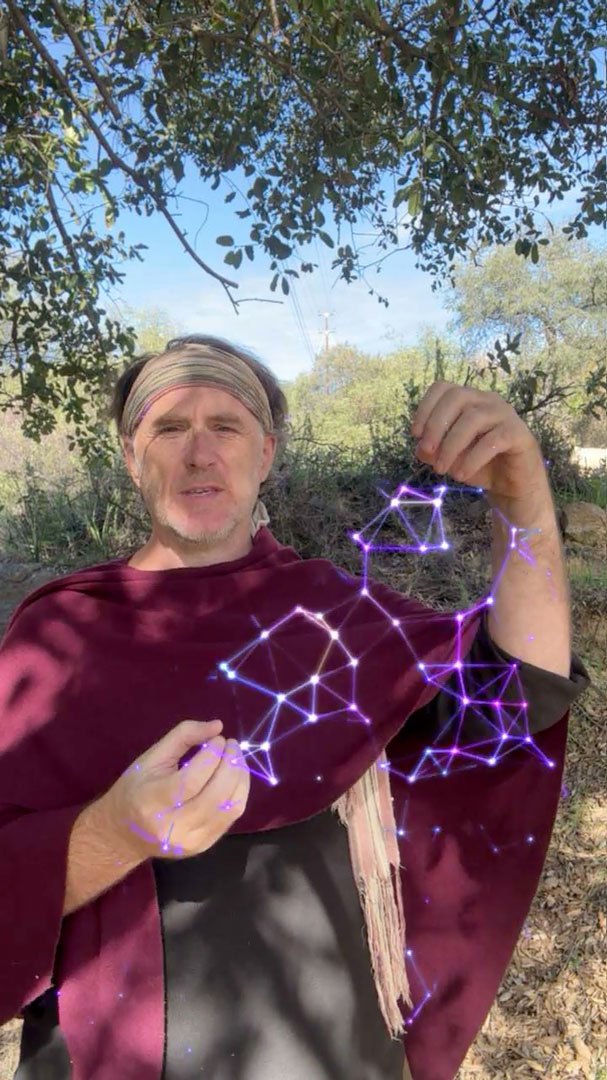
Spellwork is all about perception. About being able to sense the energies that move through a circumstance, sensing the electromagnetic energies which play out in the ethers of the creation. It’s not “positive thinking,” and it’s not a lever you pull to force reality into obedience. It’s closer to learning how to read the room—except the room is a living field, layered with currents you can’t always see, but can learn to feel.
Perception, here, means precision. It means noticing what’s actually present before you decide what it should be. The subtle tightening in the chest when a conversation turns. The strange lift in the air when a true invitation appears. The way a place can feel charged or drained. The way certain names, songs, symbols, or memories arrive like weather—bringing pressure changes with them. Spellwork begins when you stop treating life as only matter and calendar, and start recognizing it as relationship: between thought and body, between intent and timing, between your inner state and the larger field that meets it.
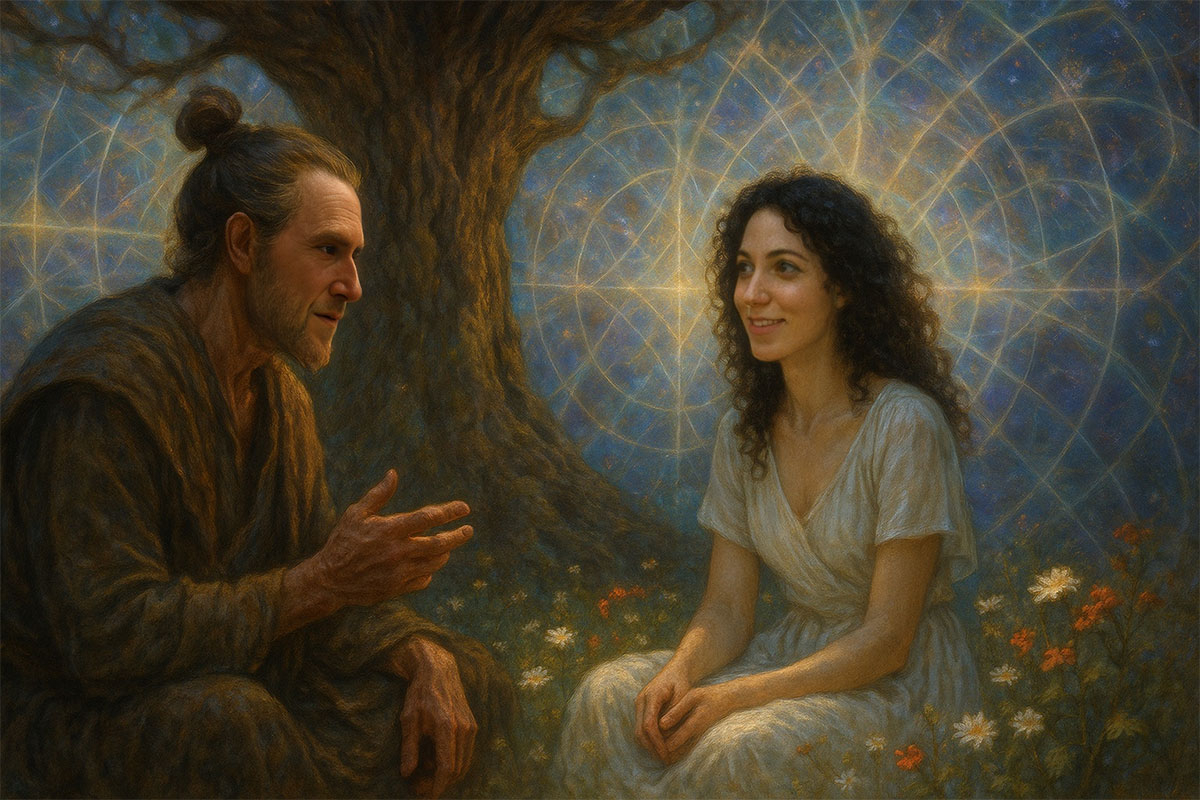
This is the sense of the underlands—the strata beneath the obvious sentence. The underlands are where motifs repeat, where echoes gather, where the older story runs. They are the dream-roots under daily life, the hidden corridors where fear and devotion both travel. When you practice spellwork, you’re not escaping into fantasy; you’re learning to track the deeper movement that was already there. You’re listening for the quiet grammar beneath the obvious sentence, the way an “ordinary” moment can be punctuated by something unmistakably alive.
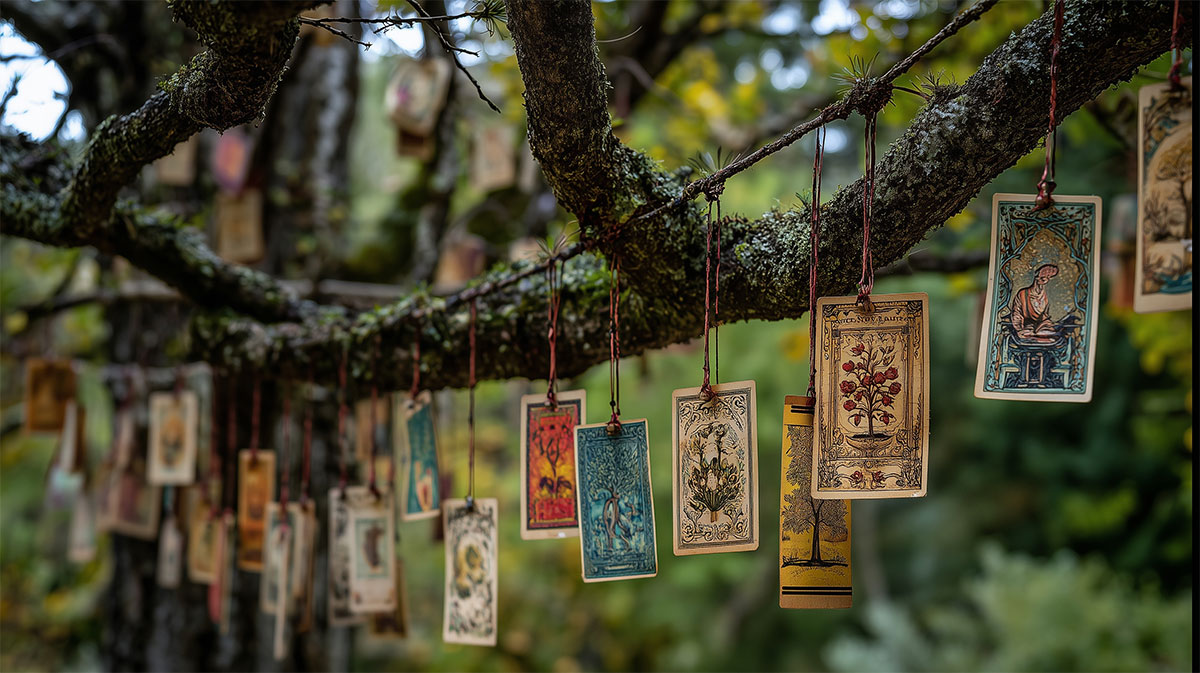
And it’s also the sense of the Grove of Life: that living architecture of branches and pathways, where each choice is less a fork in the road than a shift in orientation. In the Grove, you don’t simply do a thing and get a result—you enter a set of correspondences. Certain actions harmonize; others clash. Some intentions take root easily because the season is right; others refuse because the ground is not ready. Spellwork is learning the language of that readiness: the signals of alignment, the warnings of distortion, the felt knowledge of “not yet” versus “now.”
Which is why spellwork is inseparable from the timeline of our stories. Not because you can rewrite the past with a gesture, but because your story is not a straight line—it’s a weave. The timeline holds knots, loops, repetitions, thresholds you keep arriving at until you arrive differently. When you sense the energies that move through a circumstance, you’re also sensing where you are in the narrative geometry: whether you’re at a door, a spiral, a return, a descent. You’re recognizing what chapter you’re in, and what that chapter is asking of your attention.
In that way, spellwork becomes less about control and more about clarity. Less about demanding outcomes and more about meeting the living pattern with awake eyes. You learn to feel the electromagnetic energies which play out in the ethers of the creation—not as abstract theory, but as intimacy with the field you’re already inside. And from that intimacy, the smallest shifts matter: a word chosen cleanly, an offering made with sincerity, a boundary held without drama, a candle lit as a signal to your own deeper mind.
Spellwork is all about perception. And perception—trained, honest, embodied—changes everything, because it changes where you’re standing in the Grove, how you move through the underlands, and how you walk the timeline of our stories.




Responses