hypersigil
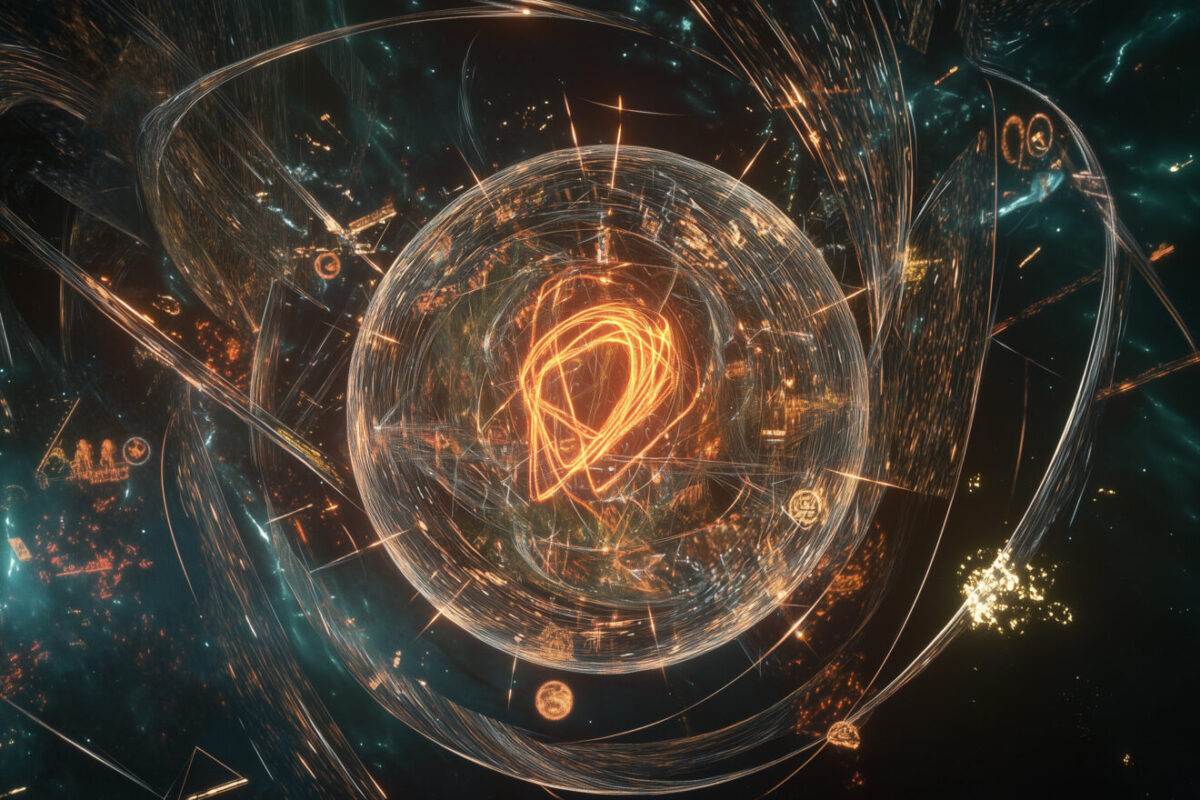
A hypersigil is a sustained creative work that functions as living magic — not merely art about transformation, but art as transformation. The term was introduced by writer and magician Grant Morrison, whose sprawling graphic novel series The Invisibles served as the original demonstration: a narrative woven with personal intention, archetypal symbolism, and mythic structure, designed to act upon reality rather than simply describe it. Where a traditional sigil compresses an intention into a single symbol, a hypersigil expands that same principle into an entire world — story, character, geography, and encounter all becoming the body of the spell. The creative act itself is the invocation, and the work, once set in motion, continues to operate long after any single episode of creation has concluded.
The hypersigil is inseparable from autobiography because it works by drawing from the actual substance of a life — the actual movement through time and terrain, the actual encounters with the forces that shape a soul, the actual moments of kairos where the veil between the seen and unseen grows thin. The creator of a hypersigil does not invent a character who undergoes transformation as a fictional exercise; the creator is the character, and the story documents what is genuinely happening at the level of the akasha, beneath the surface of ordinary events. The narrative becomes a means of tracking correspondence: as the story moves, the life moves. As the life moves, the story deepens. The two are not separate processes reflecting each other but one process seen from two angles simultaneously.
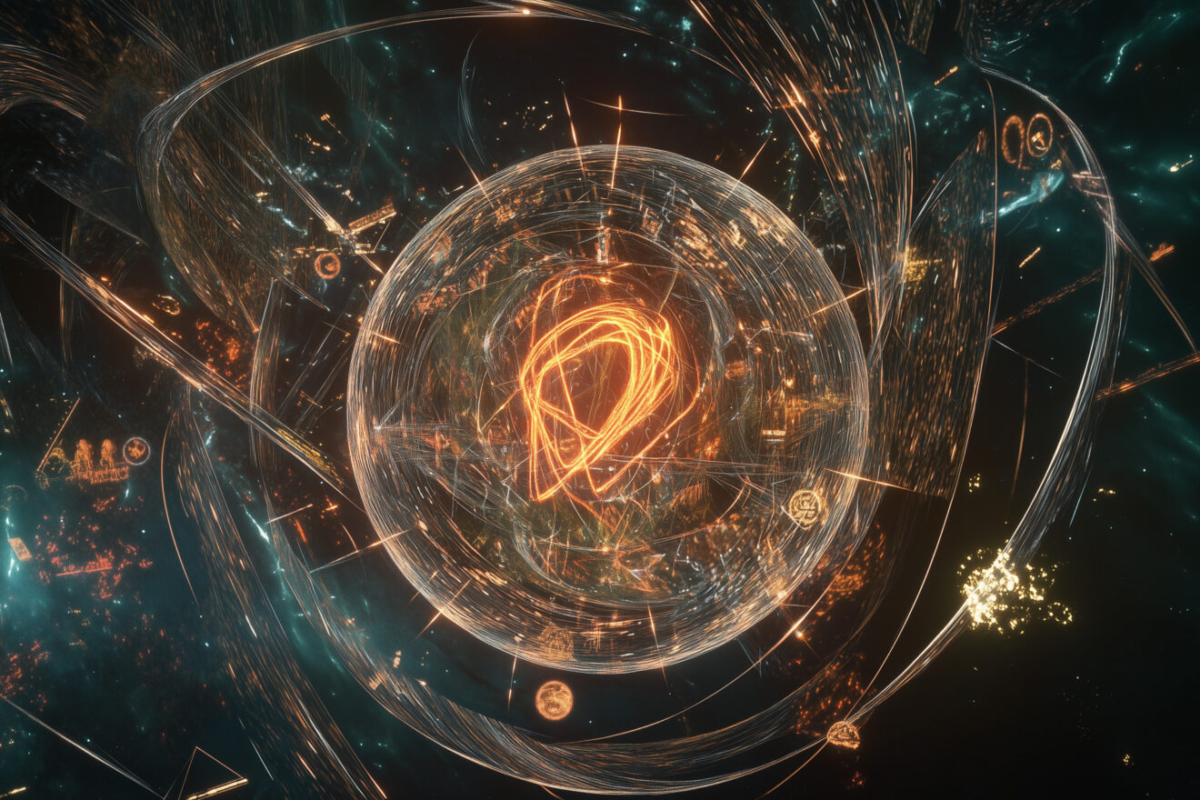
Into the Mythica is a hypersigil in precisely this sense — a living cartography of the Mythosphere, built from actual movement through the subtle world across more than two decades of documented Quest. Every post is a glyph. The whole is the spell. The hypersigil accumulates resonance over time in ways that simpler magical forms cannot. Each entry, each chapter, each documented encounter adds another thread to the larger weave, and the pattern that emerges is greater than any single intention could produce. The work becomes a field that attracts, clarifies, and increasingly reveals the shape of the Great Story it was always encoding — making visible, through the medium of narrative, the invisible structure of the akashic field that underlies all of the Mythica's lived experience. The story writes the world. The world writes the story.
The primary formal unit of the hypersigil in the Mythica's digital temple is the hyperglyph: a living symbol that leverages the full expressive range of the digital medium to create a portal of meaning simultaneously visual, narrative, symbolic, and navigational. Where the ancient hieroglyph encoded mythic meaning in a single carved image, the hyperglyph is its dynamic, multimedia evolution — a unified, multidimensional field of communication in which text, image, video, sound, and interactive structure are layered into a single artifact. Within the Mythica's cosmological framework, hyperglyphs function as portals: images that carry embedded links allowing you to navigate organically through the layered dimensions of the cosmology, moving from the visual symbol into the conceptual territory it encodes, and from there into the living narrative that gives it experiential flesh. Ancient practitioners knew that certain images, received in the right state of awareness, could transmit understanding that no discursive explanation could convey — that symbol speaks directly to the deeper layers of the psyche below verbal language. The hyperglyph extends this wisdom into the digital age, creating symbols that are not merely received passively but actively navigated and inhabited. To move through the hyperglyphs of the Mythica's temple is to practice the same art of navigation that the heroic journey requires: reading the signs, following the resonance, and allowing the living structure of the symbol to guide you deeper into the territory it maps.